THE STORY & ITS AFTERLIVES
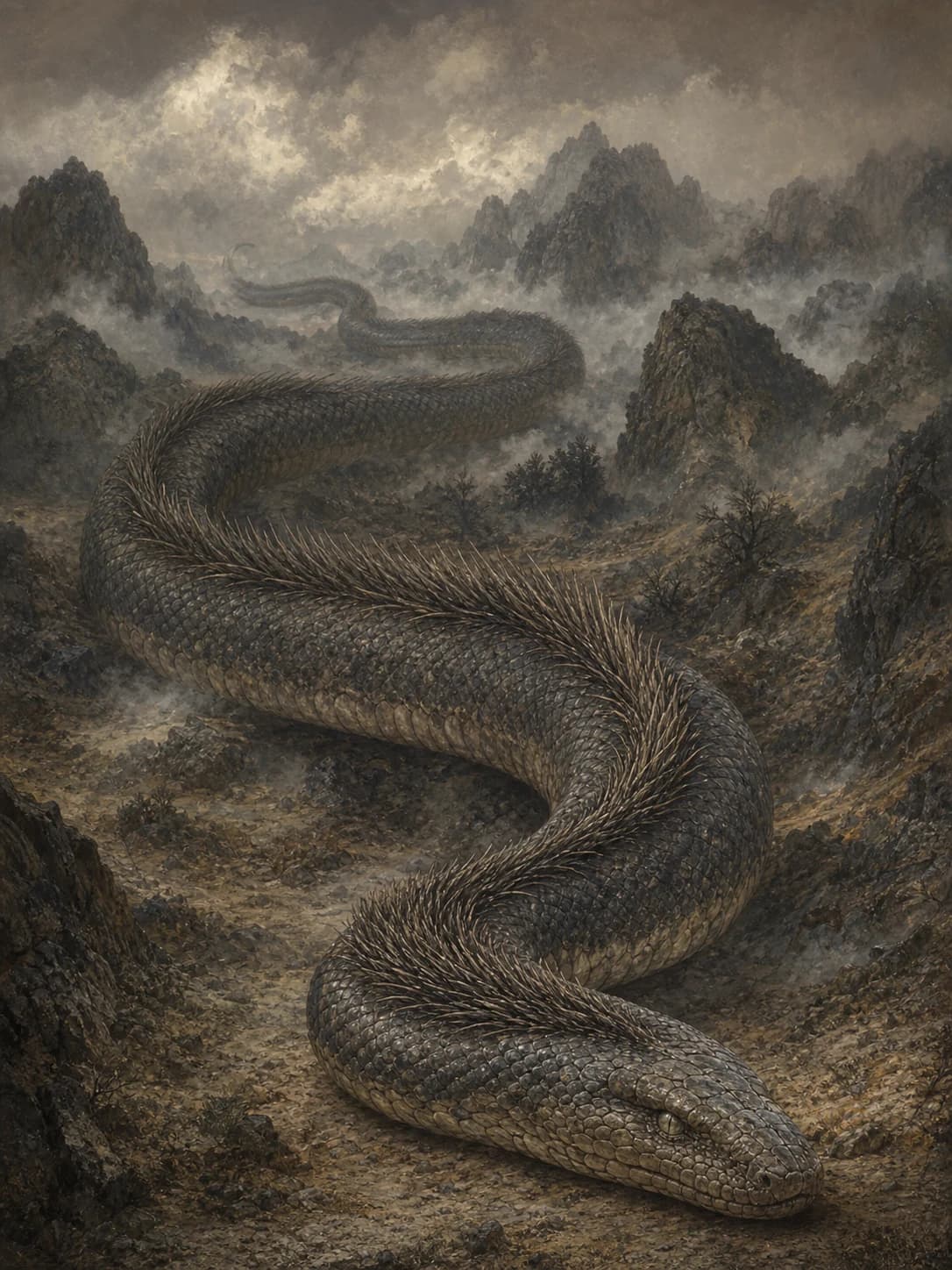
The third eastern guideway is a maritime range: its mountains are linked by legs of travel 'by water'. To reach this one, the itinerary runs five hundred li south by water, then five hundred li across flowing sands, and arrives at Mount Qizhong. The mountain measures two hundred li around, grows nothing, harbours great serpents, and is rich in jade. It is the classic's ideal of a terminal place: the distance counted in water and sand, and nothing on the summit but snakes and stone.
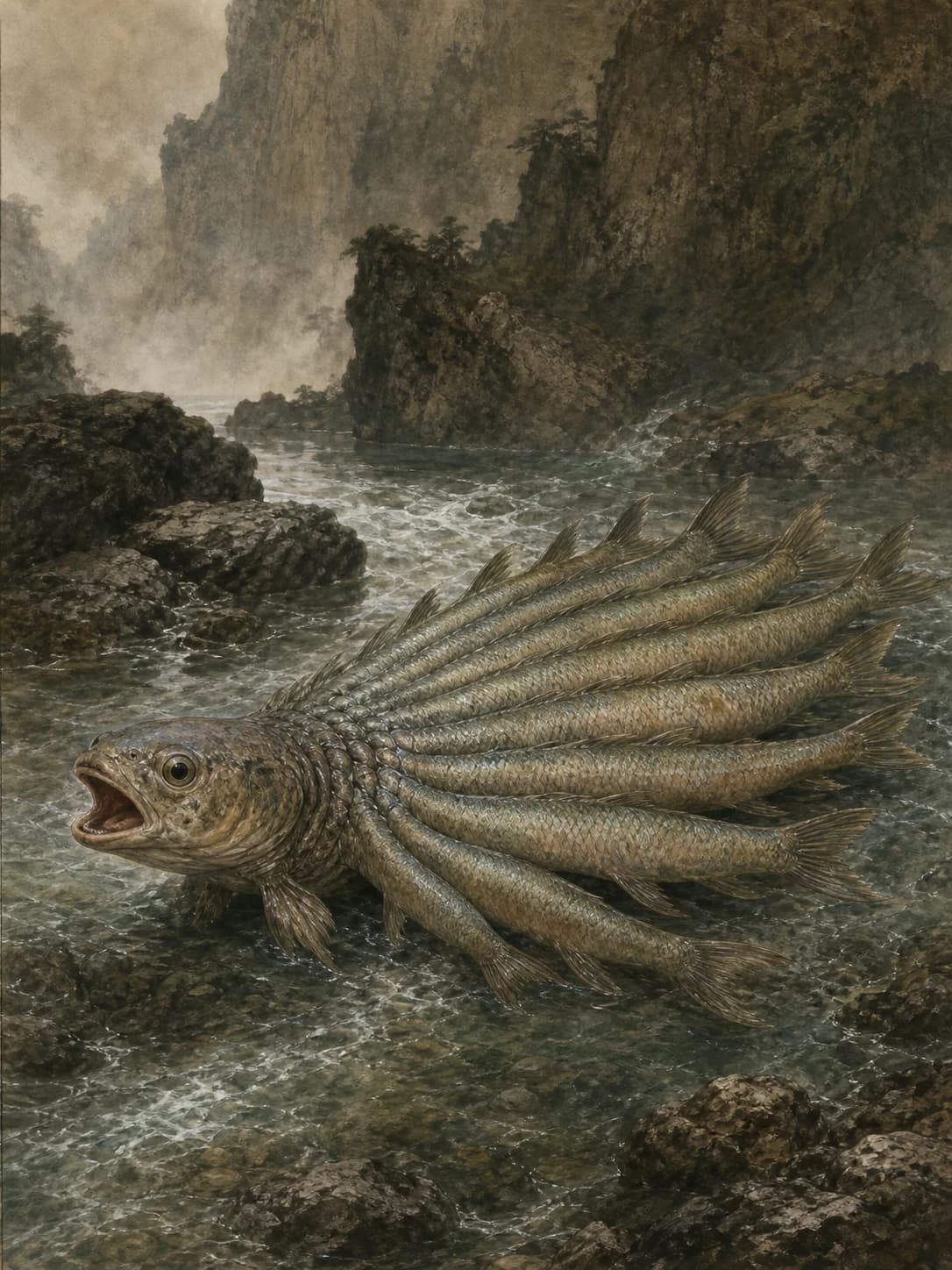
On the mountain lies a body of water called the Deep Marsh, forty li around, its springs welling up everywhere. In it live xi turtles — glossed by Guo Pu as great sea turtles of the hawksbill kind, their shells patterned — and a fish shaped like a carp but bearing six legs and a bird's tail, called the gege fish, whose cry sounds like its own name. A boiling marsh, turtles moving beneath, six-legged fish calling their name in the water: it is the most fully drawn waterscape in the third eastern guideway.
'Qizhong' means to walk on tiptoe, heels never touching the ground. The book holds two more bearers of the name: a bird of Fuzhou Mountain in the central guideways, owl-like, one-legged, and pig-tailed, whose appearance brings plague; and a Kingdom of Qizhong in the lands beyond the northern sea. Same name, different things. The mountain itself issues no omen; its menace lies entirely in the difficulty of arriving.