THE STORY & ITS AFTERLIVES
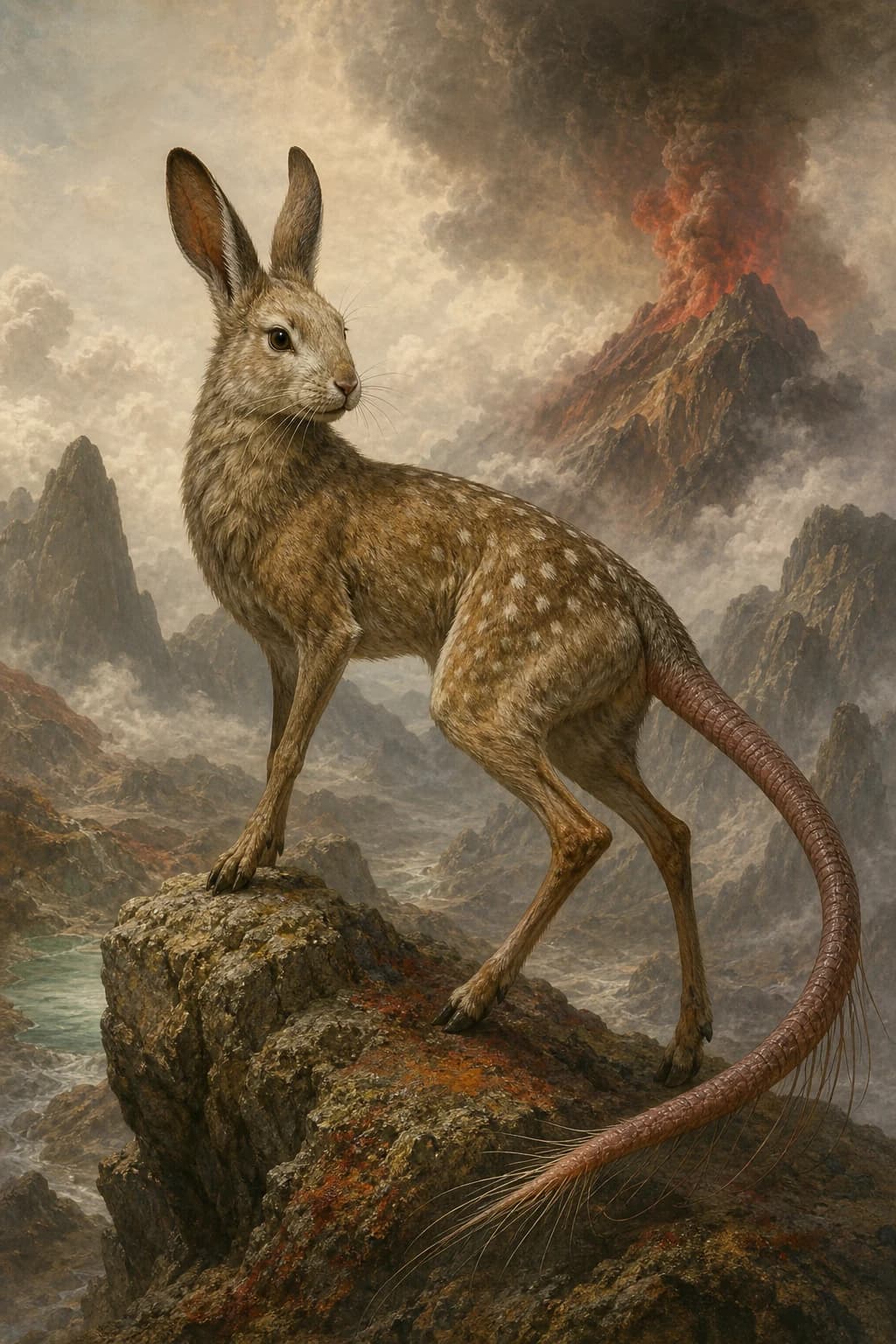
Qiaoming Mountain grows no plants and yields green realgar. Its beast is shaped like a huan — early commentators read this as a porcupine — but its stiff bristles are scarlet, and its cry is a rolling 'liu-liu'. It is called the menghuai, and the classic assigns it a function in four characters: it can ward off evil.
Most creatures in the classic are omens of disaster or eaters of men; those that protect can be counted on one hand. The menghuai belongs to this small company. It predicts nothing and harms nothing — the animal itself is an apotropaic instrument. Guo Pu's commentary adds that it figured among the 'fearsome beasts' paintings: in the Wei-Jin period, images of monsters fierce enough to frighten off demons were painted and hung as protection, and the menghuai was in the set. Why a red porcupine should intimidate evil, neither text nor commentary explains; perhaps a body bristling with scarlet spikes was explanation enough.
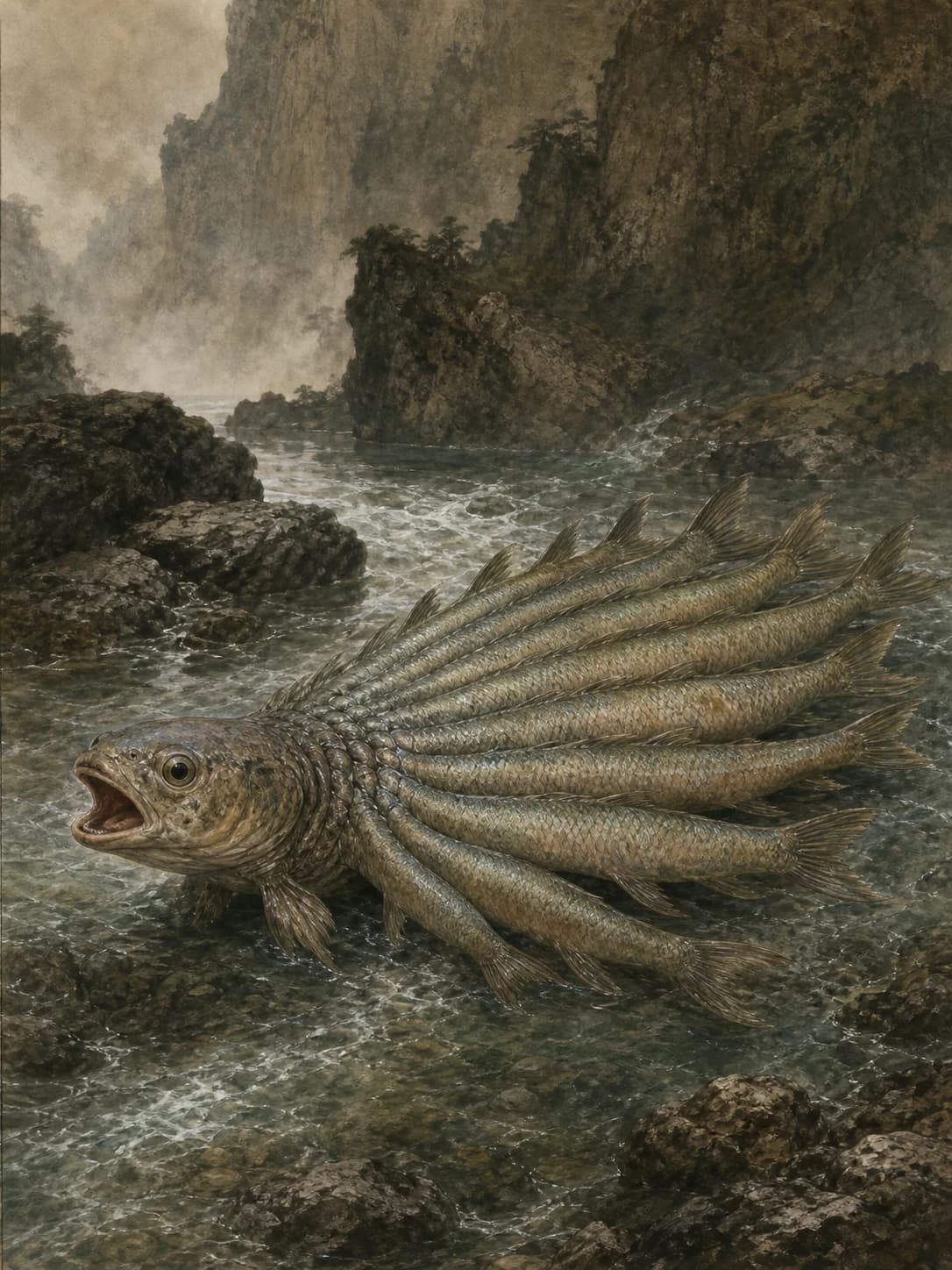
In the Qiao River below swims the heluo fish, one head and ten bodies, a cure for abscesses. For a bald mountain without a blade of grass, Qiaoming is generously stocked — one surgical remedy and one charm against evil — making it a rare benign address in the northern catalogue.