THE STORY & ITS AFTERLIVES
Fuli Mountain, in the second eastern guideway, holds gold and jade above and needle-stone below. Its beast is at base a fox, multiplied at both ends: nine heads, nine tails, and the four paws swapped for a tiger's claws. It is called the longzhi — the manuscripts also transmit a variant graph for the second syllable. Its voice is the crying of an infant, and it eats people. The infant's wail to draw the victim close, tiger's claws to hold, and nine mouths to share: among the classic's man-eaters, few are so completely equipped.
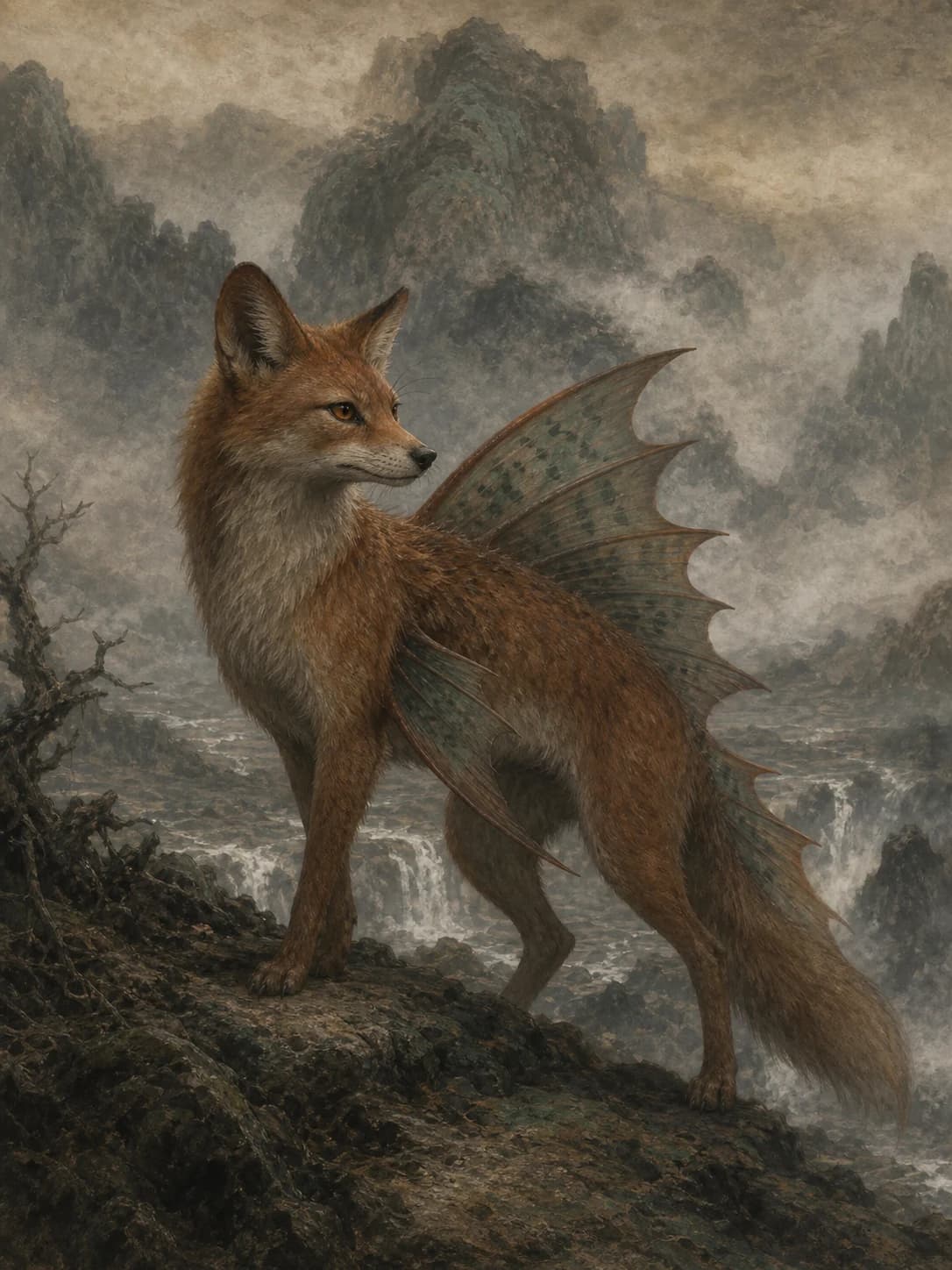
The famous nine-tailed fox of Qingqiu, in the southern guideways, has only the nine tails — with the same infant cry and the same taste for human flesh — yet Han-dynasty apocrypha rehabilitated it as an auspicious sign, and it went on to a vast career in fox-demon lore, Daji included. The longzhi reads like its undomesticated eastern cousin: nine extra heads, tiger's claws, and no rehabilitation whatsoever. It stays on the man-eater list from beginning to end, a parallel variation on the same motif in a different mountain range of the same book.
The character 'long' properly names a large ant and has nothing to do with foxes; commentators treat it as a pure phonetic loan. In illustrated editions the nine heads are usually ranked in a row across the shoulders and the nine tails fanned out behind, filling the frame — the most crowded panel in the second eastern guideway.