THE STORY & ITS AFTERLIVES
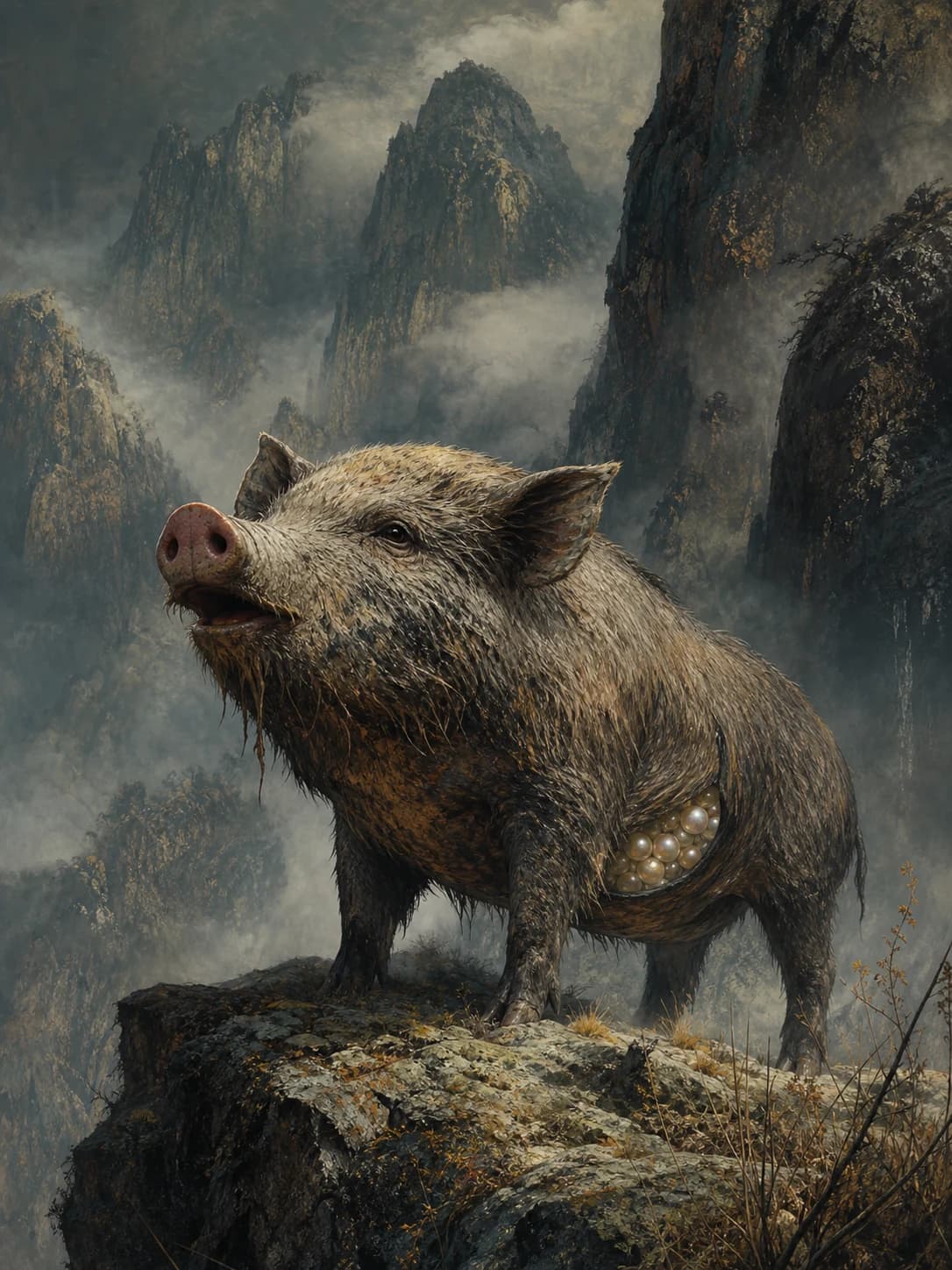
Qin Mountain, in the fourth eastern guideway, abounds in gold and jade and has no common stone at all. Its beast is the dangkang: a pig in shape, but with tusks protruding, and a cry that sounds like its own name. Its omen reads 'when it is seen, all under heaven enjoys a great harvest' — the year the dangkang shows itself, the granaries fill.
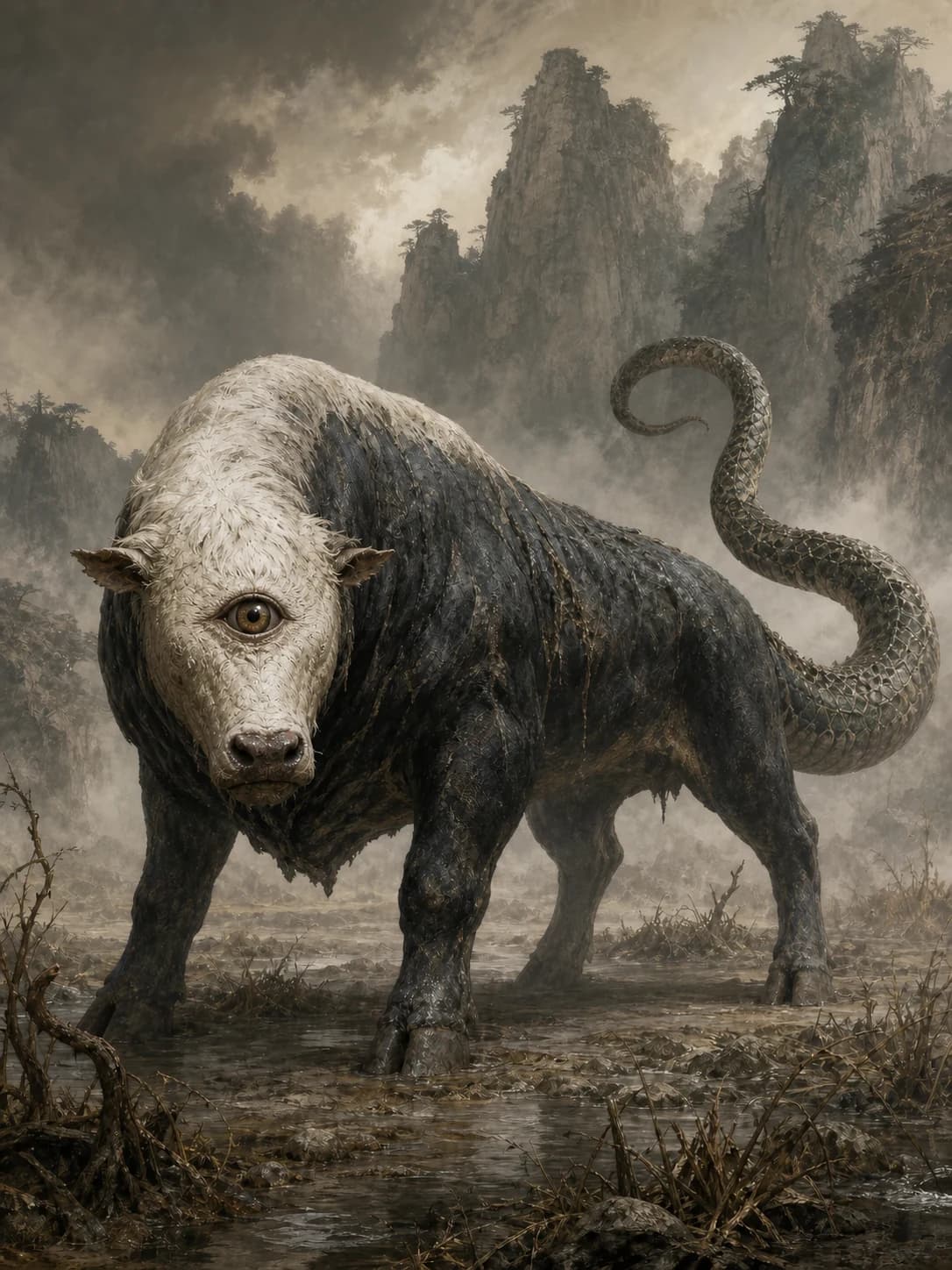
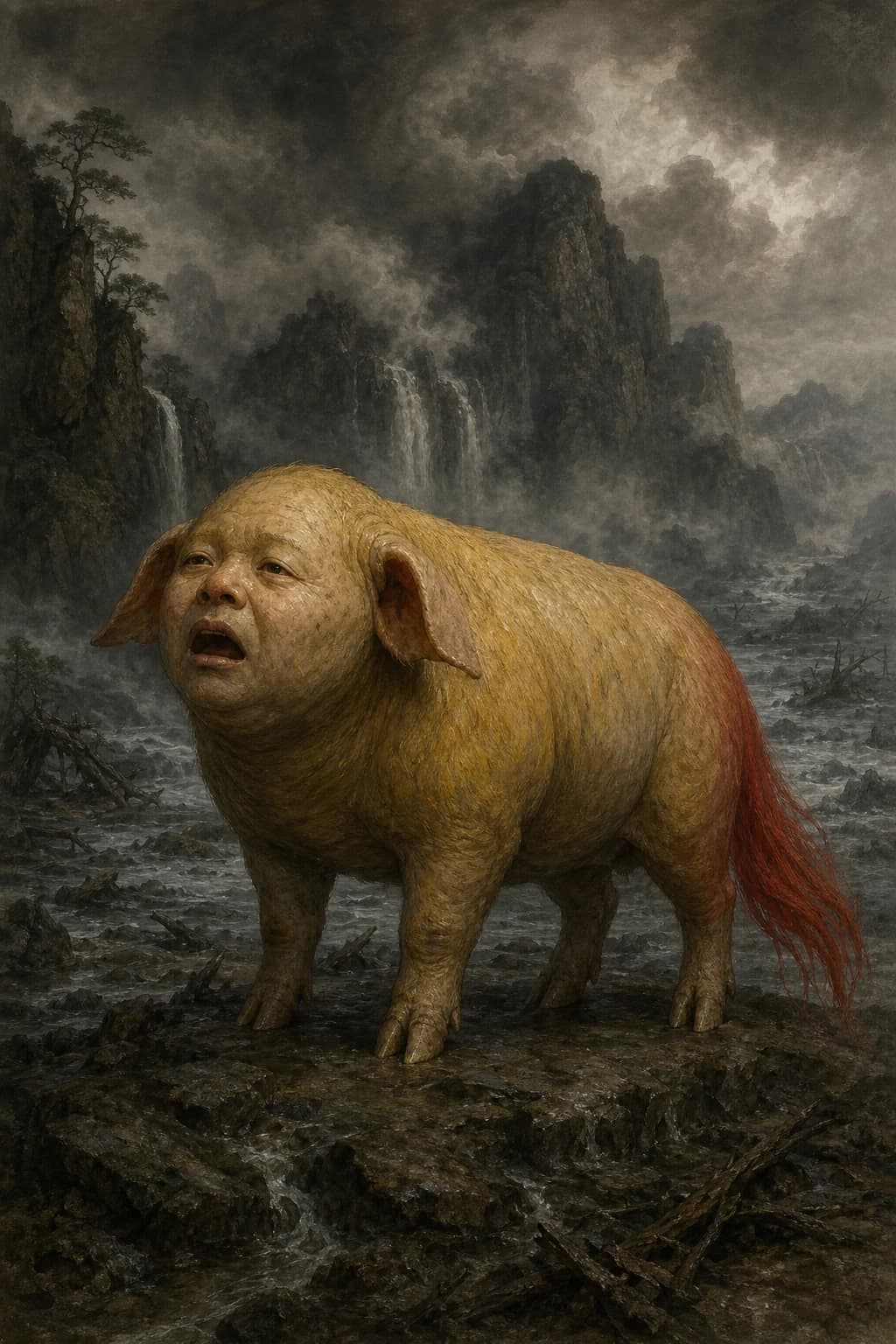
In the disaster-ridden fourth eastern guideway, the dangkang is the only piece of good news. Its neighbours are uniformly grim: the man-eating xieju of Beihao Mountain, the flood-bringing heyu of Yan Mountain, the plague-bearing fei of Tai Mountain, the drought-fish of Nüzheng Mountain. Alone among them, the tusked pig walks under the sign of abundance. A pig as harvest omen needs little explaining: swine head the sacrificial and festival table among the six domestic animals, and full granaries mean full sties — a fat, strong-tusked boar simply looks like a good year.
Illustrated editions favour a running dangkang glancing back over its shoulder, tusks upturned, body round, almost festive. Later writers on the classic's auspicious beasts habitually pair it with the tongtong — both pig-shaped, one announcing plenty, the other carrying pearls. The eastern mountains assigned both of their blessings to pigs.