THE STORY & ITS AFTERLIVES
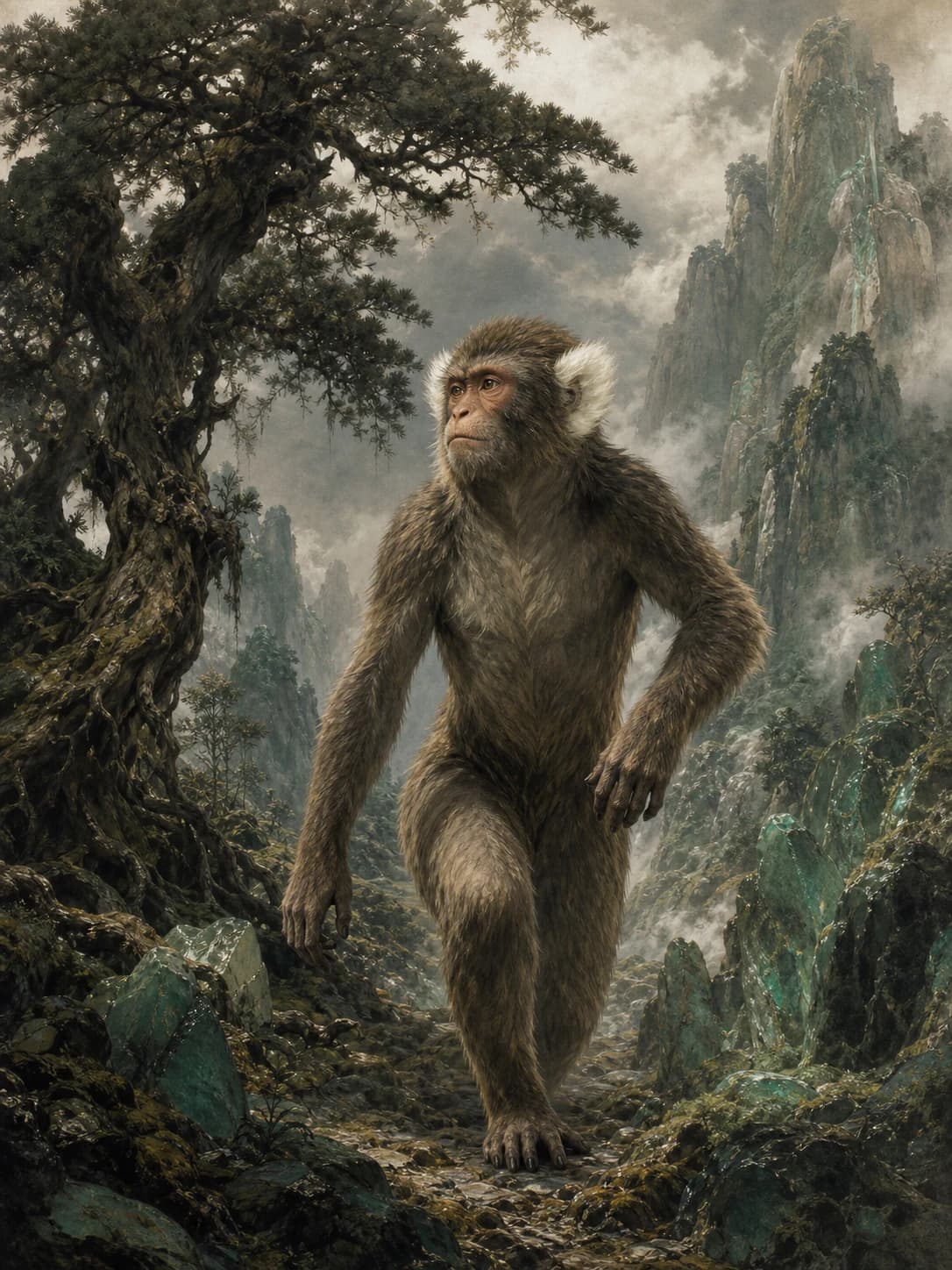
Mount Changyou bears no plants but abounds in streams, and the beast that lives there shares the mountain's name. The Classic of the Southern Mountains describes it as shaped like the yu, a large macaque, but with four ears, its voice like a low human groan. Then comes the clause that matters: wherever it is seen, that district will suffer great floods.
The changyou belongs to the book's system of 'when seen' portents. It neither attacks nor devours; all its menace lies in the fact of its appearance. The wording is precise about scale — the flood falls on exactly the county the beast visits, one register below the drought-bird Yong whose influence covers all under heaven, and for that reason more intimate: the water that follows it drowns one's own fields. The second southern range reads like a gazetteer of local calamities foretold by animals — the pig-like Lili of Mount Ju heralds heavy earthworks, the bristled Huahuai of Mount Yaoguang heralds mass corvee labor, and the changyou keeps the portfolio of floods. Ming and Qing illustrators liked to draw the four-eared ape clinging to a bare branch, head cocked as if listening for rising water.